Florida's minimum is legal. It's not enough.El mínimo de Florida es legal. No es suficiente.
With $10,000 of PIP and $10,000 of property damage you can register your car. What nobody tells you is what happens when the car you hit is worth $35,000.Con $10,000 de PIP y $10,000 de daños a la propiedad puedes registrar tu carro. Lo que no te dicen es qué pasa cuando el carro que chocas vale $35,000.
Nov 9, 20266 min readFuente team · Doral9 nov 20266 min de lecturaEquipo Fuente · Doral
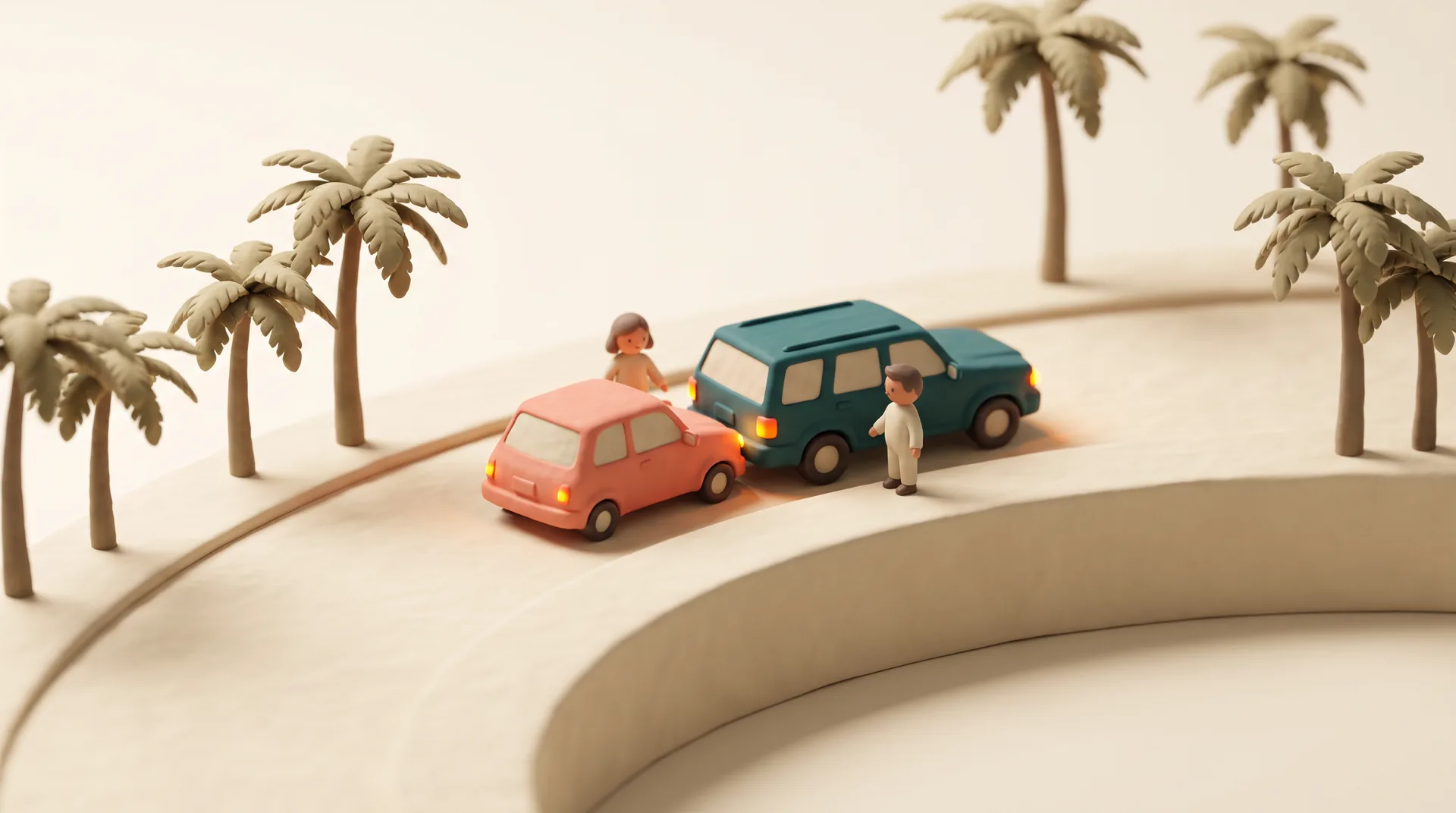
A tap on the bumper of a new SUV can cost more than the minimum insurance pays.Un toque al bumper de una SUV nueva puede costar más de lo que paga el seguro mínimo.
A sudden stop on the 836, a tap on the bumper of this year's SUV. Nobody got hurt. The body shop bill, though, is coming with your name on it.
Florida has some of the lowest car insurance requirements in the country. To register a four-wheel vehicle, the law only requires two things: $10,000 of PIP (personal injury protection) and $10,000 of PDL (property damage liability). Many people buy exactly that and think they're "fully covered."
What the law requires
Coverage
Minimum
What it pays
PIP
$10,000
Your medical costs (80% of what's reasonable) and part of your lost wages (60%), no matter who was at fault.
PDL
$10,000
Damage you cause to other people's property: their car, a fence, a wall.
Bodily injury to others (BI)
Not required to register
Injuries you cause to other people. Note: after certain crashes, the law can require you to show this coverage.
Your own car
Not required
The minimum doesn't pay for your car. That's what collision and comprehensive are for.
The math on an everyday crash
The math, written out
You rear-end a new SUV and it's a total loss
Value of the SUV$35,000
Your minimum PDL pays− $10,000
What's left in your name$25,000
With $50,000 of PDL$0 out of pocket ✓
And that's just the SUV. If someone in the other car is hurt and you don't have bodily injury coverage (BI), that part can also end up as a lawsuit against you.
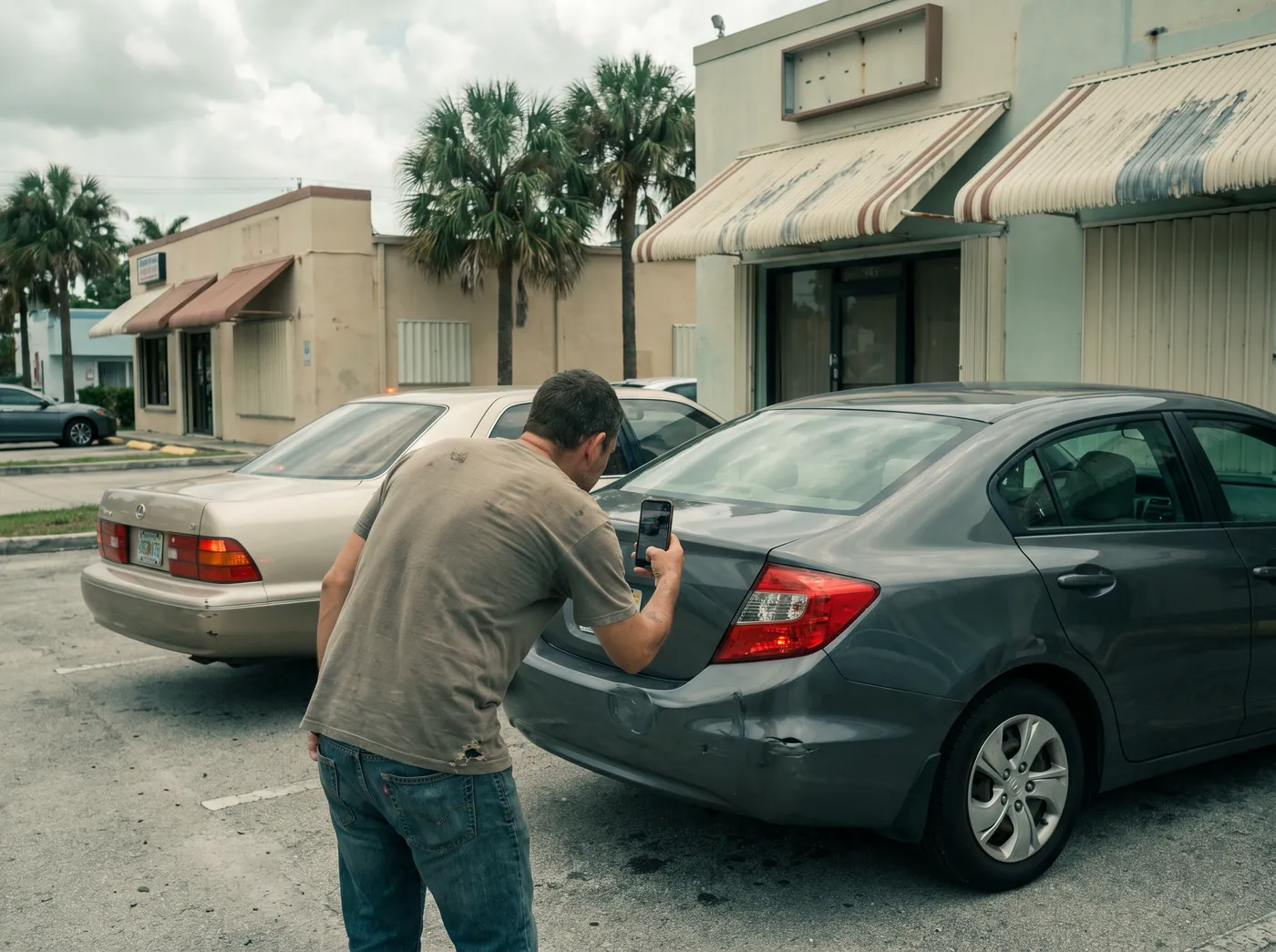
After a crash: photos of both cars, the other plate, the location and the license. Your agent will ask for them.
1 in 5 has no insurance
According to the Insurance Research Council, about 20.6% of Florida drivers are uninsured, the seventh-highest rate in the country, and about 38% are underinsured (2023 data, published in 2025). On the street, that means if someone hits you, there's a good chance they can't pay you.
That's what uninsured motorist coverage (UM) is for: it protects your injuries when the at-fault driver has no insurance or not enough.
What the minimum leaves out
Bodily injury (BI): protects you if you hurt someone in a crash you cause.
Uninsured motorist (UM): for when the at-fault driver can't pay.
Collision: repairs your car after a crash.
Comprehensive: theft, vandalism, falling trees and, very important in Miami, flooding. If your car is on the street when the water rises, this is what responds.
Higher PDL: in a city full of new cars, $10,000 goes fast.
What to check today
Open your insurance card or policy and find your PDL, BI and UM limits.
If it only says PIP and PDL, you have the minimum.
Ask what it costs to raise PDL and add BI and UM. The difference is sometimes smaller than you think.
The takeaway
The minimum keeps you legal. What protects your wallet is what you add on top: more property damage, bodily injury and uninsured motorist.
Questions about your policy?
We'll review it and compare options, no obligation.
This article is general information and doesn't replace reading your policy or advice from a licensed agent. Facts checked in November 2026; laws and requirements can change.
Un frenazo en la 836, un toque al bumper de una SUV de este año. Nadie salió herido. La factura del taller, sin embargo, va a llegar a tu nombre.
Florida es uno de los estados con los requisitos de seguro de auto más bajos del país. Para registrar un vehículo de cuatro ruedas, la ley solo exige dos cosas: $10,000 de PIP (protección contra lesiones personales) y $10,000 de PDL (responsabilidad por daños a la propiedad). Mucha gente compra exactamente eso, y piensa que “tiene full”.
Lo que exige la ley
Cobertura
Mínimo
Qué paga
PIP
$10,000
Tus gastos médicos (el 80% de lo razonable) y parte de tu salario perdido (60%), sin importar quién tuvo la culpa.
PDL
$10,000
Los daños que tú causas a la propiedad de otros: su carro, una cerca, una pared.
Lesiones a otros (BI)
No se exige para registrar
Las lesiones que causas a otras personas. Ojo: si causas ciertos accidentes, la ley te puede exigir demostrar esta cobertura después.
Tu propio carro
No se exige
El mínimo no paga tu carro. Para eso existen collision y comprehensive.
La cuenta de un choque normal
La cuenta, escrita
Chocas por detrás a una SUV nueva y queda pérdida total
Valor de la SUV$35,000
Tu PDL mínimo paga− $10,000
Lo que queda a tu nombre$25,000
Con PDL de $50,000$0 de tu bolsillo ✓
Y eso es solo la SUV. Si alguien en el otro carro se lesiona y no tienes cobertura de lesiones a otros (BI), esa parte también puede terminar en una demanda contra ti.
Después de un choque: fotos de los dos carros, la placa del otro, el lugar y la licencia. Tu agente te las va a pedir.
1 de cada 5 no tiene seguro
Según el Insurance Research Council, alrededor del 20.6% de los conductores en Florida no tiene seguro, el séptimo porcentaje más alto del país, y cerca del 38% tiene muy poca cobertura (datos de 2023, publicados en 2025). Traducido a la calle: si te chocan, hay buenas probabilidades de que el otro conductor no tenga con qué pagarte.
Para eso existe la cobertura de motorista sin seguro (UM): protege tus lesiones cuando el culpable no tiene seguro o no tiene suficiente.
Lo que el mínimo no trae
Lesiones a otros (BI): te protege si lastimas a alguien en un accidente que causas tú.
Motorista sin seguro (UM): para cuando el culpable no puede pagar.
Collision: repara tu carro después de un choque.
Comprehensive: robo, vandalismo, caída de árboles y, muy importante en Miami, inundación. Si tu carro se queda en la calle cuando sube el agua, esto es lo que responde.
PDL más alto: en una ciudad llena de carros nuevos, $10,000 se va rápido.
Qué revisar hoy
Abre tu tarjeta de seguro o tu póliza y busca los límites de PDL, BI y UM.
Si solo dice PIP y PDL, tienes el mínimo.
Pregunta cuánto cuesta subir el PDL y añadir BI y UM. A veces la diferencia es menor de lo que crees.
Para llevar
El mínimo te deja manejar legal. Lo que te protege el bolsillo es lo que añades encima: más daño a la propiedad, lesiones a otros y motorista sin seguro.
¿Dudas sobre tu póliza?
Te la revisamos y comparamos opciones, sin compromiso.
Este artículo es información general y no sustituye la lectura de tu póliza ni la asesoría de un agente licenciado. Datos verificados en noviembre de 2026; las leyes y requisitos pueden cambiar.
Questions about your policy?¿Dudas sobre tu póliza?
We'll review it with you.La revisamos contigo.
A Doral agent compares several insurers for you, in English or Spanish. No obligation.Un agente en Doral compara varias aseguradoras por ti, en español o en inglés. Sin compromiso.